Roast Degree: From Green Bean to Cup
Understanding the key stages of roasting and how they shape the taste of your coffee
By Stephanie - 6 October, 2026
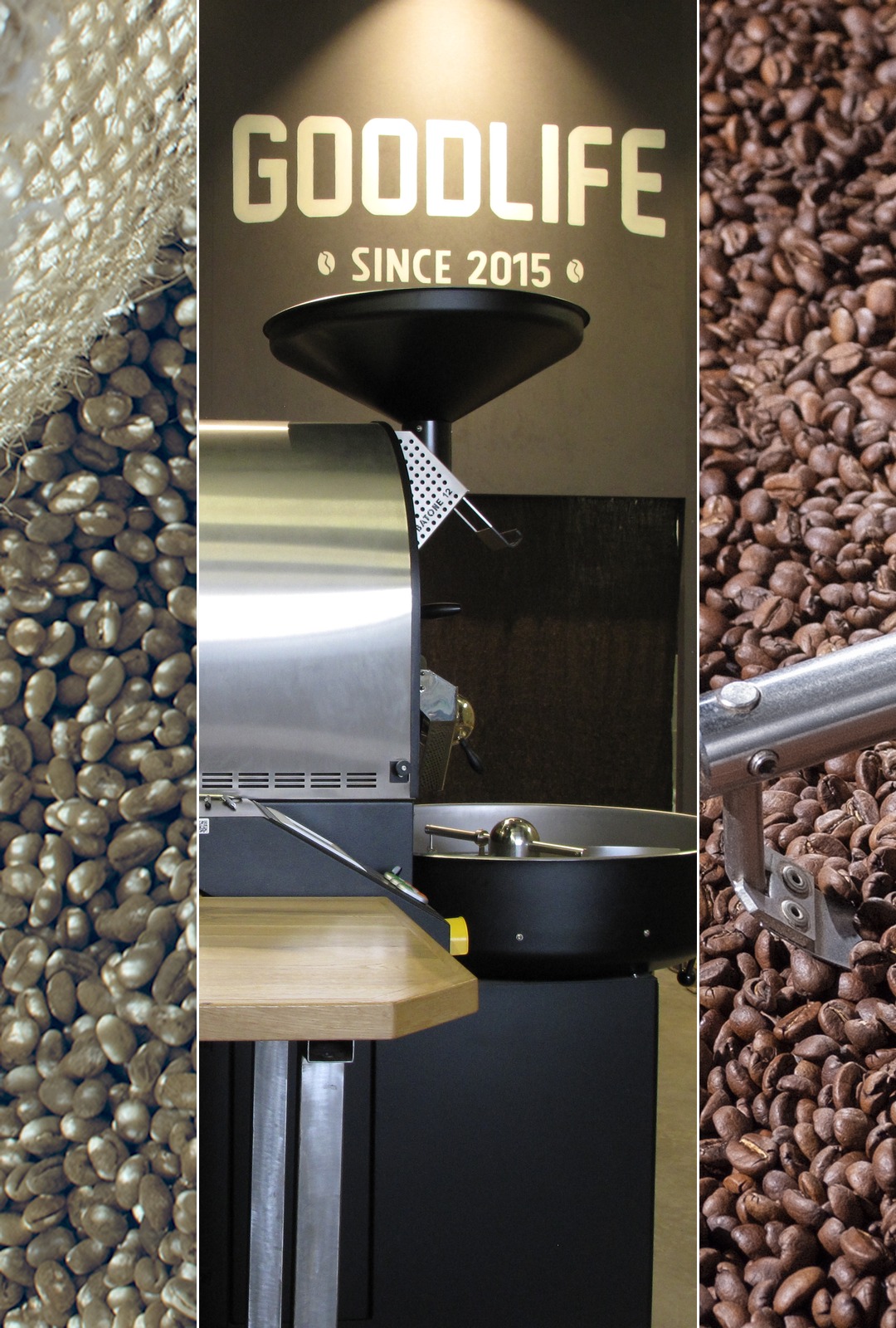
On our bags, you'll find an origin, a producer, tasting notes… and often a roast indication: light, medium or darker. Yet behind these few words lies one of the most decisive stages in a coffee's life. Depending on how it is roasted, the same green bean can produce very different flavor profiles. At Goodlife, this transformation takes place in our roastery in Savigny, batch after batch.
Understanding roast degree means better understanding what you taste. It also means discovering the patient work behind every new coffee we offer you.
First crack and development
Green coffee is a hard, dense seed with a vegetal smell that is closer to hay than to coffee. It develops almost none of its aromas before being roasted. On our machine, a roast lasts between 10 and 13 minutes. It is the final phase that most determines the coffee's flavors.
Under internal pressure, the bean eventually cracks with a small, sharp sound, much like popcorn: this is the first crack. From that moment on, the development phase begins. Every second counts. The shorter it is, the lighter the bean stays. The longer it lasts, the darker it becomes. If roasting continues further, a second crack occurs and the oils rise to the surface of the bean.
How roasting shapes taste
In our article on acidity, bitterness and sweetness, we saw that the balance of a cup depends on extraction. It also depends on roasting, which shapes bitterness and acidity just as much.
The lighter the roast, the more acidity the coffee retains. The further it is taken, the more that acidity fades in favor of bitterness. The perception of fruit changes too. A light roast evokes fresh, juicy fruit such as citrus, peach or red berries. A darker roast is more reminiscent of dried fruit, such as raisins, dates or dried figs. It is the same fruit, in a way, seen in a different light.
A light roast preserves the identity of the origin. The most delicate aromas (floral, citrus, red berries) are not masked. This is the choice we make for our Hakuna Matata, a washed Ethiopian coffee whose bergamot notes and silky, almost tea-like texture we want to preserve. When well controlled, a light roast gives a bright, precise cup. If it is too short, however, it leaves cereal or grassy aromas, or an aggressive acidity: this is called an underdeveloped coffee.
A medium roast seeks balance. Acidity softens, sweetness develops fully and the body becomes rounder. Our Chaska, a washed coffee from Cajamarca in Peru, from the APROCASSI cooperative, is a fine example: its cranberry note remains present, rounded out by an almond sweetness and a velvety texture that make it an excellent espresso.
A darker roast highlights body, caramelized sweetness and a pleasant bitterness. Our Dawn Patrol, from MAV Coffee in El Salvador, is better suited to a darker roast: it brings out its notes of caramel, toasted almonds and chocolate, perfect for a generous espresso or a milk-based drink. Taken too far, this kind of roast brings out burnt, ashy or woody notes: this is called an overdeveloped coffee.
So there is no such thing as a "right" roast degree in absolute terms. There is the right degree for a given coffee, and for the way it will be brewed.
How we develop a new coffee
When a new green coffee arrives at the roastery, we don't yet know its ideal profile. Every lot is different: its density, moisture, processing method and variety all influence how it reacts to heat. Developing a new profile therefore always follows the same approach.
- Observe the green bean. We first measure its moisture and taste it at a cupping, using a sample roasted in a neutral way. This gives us a first idea of its potential.
- Roast several profiles. We then carry out a series of small roasts on our sample roaster, varying the development time after the first crack. For each trial, we measure the bean's color with a device. The lower the number, the darker the color: the roast is further along and development lasted longer. Conversely, a high number indicates a light roast and shorter development.
When developing our Hambela, a washed coffee from the Guji region of Ethiopia, from the Asgori washing station, we roasted six different profiles, for example, from the longest development to the shortest. The longest, with a color reading of 100, gave an overdeveloped coffee. The shortest, at 115.5, was clearly underdeveloped. In between, a trial at 103 revealed more peach notes but was still too bitter. In the end, it was the profile at 108, with slightly shorter development, that offered the best balance of fruit, sweetness and clean cup. It is this profile that now brings out its notes of apricot, elderflower and honey. - Taste, compare, choose. The team tastes all the trials side by side, blind whenever possible. We taste them as filter and as espresso, hot and then lukewarm, because a coffee often reveals its flaws or qualities as it cools.
- Validate in production. Once the profile is chosen, we reproduce it on larger quantities with our 12 kg Probat roaster. We roast a batch aiming for the target color, then measure it. If the beans are lighter than our target, we develop them more in the next roast. If they are darker, we develop them less.
This work can take several days, sometimes several weeks. But it is what ensures that the coffee you receive expresses the best of what the producer has grown.
In conclusion
Roast degree is not just a color setting. It is a choice of interpretation: bringing out the liveliness of an origin, the indulgence of a bean or the power of an espresso. The next time you open a bag of Goodlife coffee, take a moment to look at the color of the beans, smell their aromas and taste the story they tell. Behind every cup lie hours of trials, tastings and passion, so that your coffee is, quite simply, at its best.